

A denture reline reshapes the tissue-contacting surface of a prosthetic by adding new pink acrylic resin to improve fit against shifting gums. In contrast, a denture rebase replaces the entire acrylic base while keeping original artificial teeth. Relines correct minor fitting issues, whereas rebases fix damaged, cracked, or structurally compromised bases.
Living with full or partial prosthetics requires ongoing maintenance to ensure stability. Over time, natural bone resorption and gum atrophy cause once-snug appliances to slip or rub uncomfortably against sensitive tissues. When prosthetics lose stability, patients evaluate options for a denture reline vs rebase. Both procedures restore retention and mastication efficiency without requiring a completely new prosthetic, depending on whether tissue surface shifts or structural acrylic base deterioration has occurred.
Understanding Why Denture Fit Adjustments Are Necessary
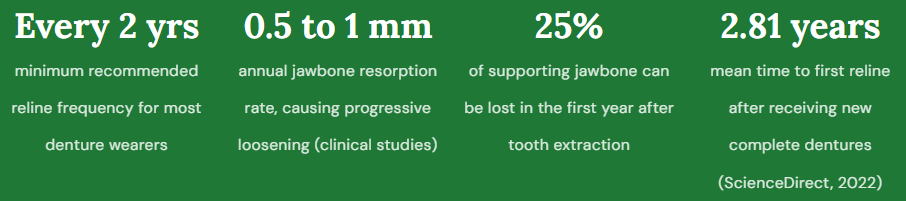
Following tooth extraction, the underlying alveolar ridge gradually changes shape through a natural process called bone resorption. Because rigid acrylic resin does not alter its shape alongside shrinking ridge contours, space forms between gums and the denture base, causing food entrapment and painful friction spots.
Addressing physical changes promptly extends the lifespan of dentures. Establishing a routine of proper denture care helps maintain oral hygiene while denturists determine whether tissue reshaping or a full denture base replacement process is needed.
What Is a Denture Reline?
A denture reline is a routine restorative procedure that reshapes the inner lining of an existing appliance. Rather than remaking the prosthetic, your denturist adds new resin inside the base so it conforms precisely to current gum contours.
How a Denture Reline Works
The denturist removes a thin layer of old acrylic from the tissue-facing side. A custom impression material is placed inside, and the patient bites down to record exact gum details before fresh acrylic is cured and refitted.
Types of Denture Relines
Soft Denture Relines
Soft relines utilize pliable silicone material providing cushioning for sensitive gums. When evaluating soft vs hard denture relines, soft options suit patients with severe bone resorption or recovering from surgery.
Hard Denture Relines
Hard relines utilize durable acrylic resin identical to the base, offering long-term stability lasting several years under proper care.
Soft vs Hard: How to Choose
If you are within the first 12 months of wearing new dentures or recently had extractions, a soft reline is usually recommended first because your bone is still changing rapidly. Once your ridge stabilizes, transitioning to a hard reline gives better long-term durability. Let your denturist assess which stage you are at rather than choosing based on price alone.
Benefits of Denture Relines
- Restores firm suction and stability during eating.
- Eliminates painful friction spots and gum irritation.
- Prevents accelerated bone loss caused by rocking prosthetics.
What Is a Denture Rebase?
A denture rebase is a comprehensive structural restoration. While a reline updates the inner contact layer, the denture rebase procedure replaces the entire pink acrylic framework while preserving existing artificial teeth.
Denture Rebase Procedure Explained
The denturist takes a detailed impression using the current appliance. Technicians detach artificial teeth from the old acrylic, cast a brand-new framework, and remount the teeth in precise alignment before final curing.
When a Rebase Is Recommended
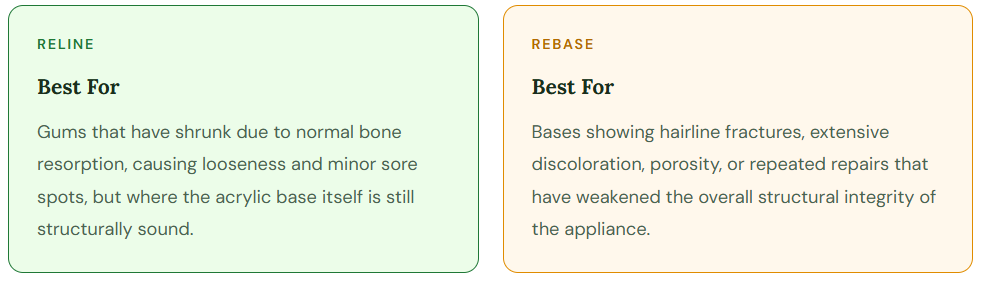
Rebasing is essential when structural integrity is compromised. Common signs that dentures need rebasing include multiple micro-fractures, severe acrylic discoloration, or repeated past repairs.
⚠️ Do Not Keep Delaying a Rebase If the Base Is Cracked
A hairline fracture in the acrylic base may seem minor but it harbors bacteria in the crack and compromises the structural integrity of the entire appliance. Continuing to wear a cracked base causes the fracture to widen under chewing pressure, often leading to a complete break at the worst possible moment. If your denturist identifies structural damage, a rebase is the appropriate intervention, not another repair patch.
Denture Reline vs Rebase: Key Differences
Evaluating denture fit adjustment options helps patients choose the appropriate treatment alongside their dental professional.
| Feature | Denture Reline | Denture Rebase |
| Primary Goal | Reshape inner lining for fit | Replace entire base structure |
| Material Replaced | Tissue surface layer only | Full pink acrylic framework |
| Artificial Teeth Kept | Yes, untouched in position | Yes, reset into new base |
| Structural Strength | Maintains existing base | Restores maximum strength |
| Turnaround Time | Same day clinical service | Requires lab work (1 to 2 days) |
| Ideal Situation | Gum shrinking, base still strong | Base cracked, porous, or aged |
Signs Your Dentures Need Fit Adjustment
When Dentures Need a Reline
You likely require a reline if your prosthetic slips while speaking or causes sore spots. If you explore loose dentures treatment options, reviewing solutions for loose dentures restores security and daily comfort.
Signs Dentures Need Rebasing
Rebasing is necessary when you notice visible hairline fractures in the pink acrylic, persistent dark acrylic stains, or chronic structural weakness.
Can Denture Maintenance and Repair Solve Fit Issues?
Minor fractures or chipped teeth can often be addressed with quick structural repairs. However, when improper fit causes recurring breakage, simple repairs offer only temporary relief. For expert evaluation and restoration, consulting Truesmile Denture Repair in Cornwall ensures your appliance is assessed accurately.
Quick Denture Assessment Checklist
- Dentures feel loose, rock during chewing, or collect food underneath.
- Gum soreness, redness, or friction spots persist along the ridge.
- Pink acrylic base shows visible cracks or severe discoloration.
- Appliance is over two years old without professional evaluation.
💡Set a Calendar Reminder
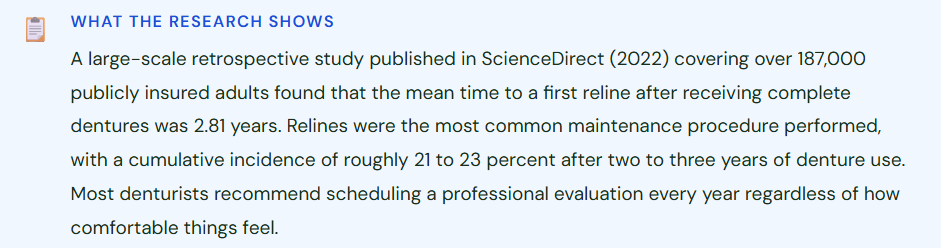
Because bone resorption happens gradually, many wearers adapt to a slowly worsening fit without realizing how far it has drifted from where it should be. Setting a recurring annual reminder to book a professional denture check takes the guesswork out entirely. Most reline decisions made at an annual review are far simpler and less costly than those made after two or three years of delayed care.
Frequently Asked Questions
What is the difference between a denture reline and a rebase?
A reline reshapes the inner tissue-facing acrylic layer to fit shrinking gums, while a rebase replaces the entire acrylic base structure while retaining original teeth.
How long does a denture reline last?
Hard acrylic relines last 2 to 4 years, whereas flexible soft relines last between 6 and 18 months depending on oral conditions.
Can loose dentures be fixed without replacing them completely?
Yes, both relining and rebasing restore snug retention and masticating function without fabricating brand-new artificial teeth.
What is the cost of denture relines and rebases in Ontario?
Costs vary based on laboratory processing and structural complexity. Relines are generally less expensive than full rebasing procedures. Eligible patients can also explore coverage through the federal Canadian Dental Care Plan to manage treatment expenses.
Final Thoughts on Restoring Your Denture Fit
Comparing a denture reline vs rebase highlights two effective paths to restoring comfort, functional stability, and facial harmony. Whether adjusting to natural tissue changes or renewing a weakened acrylic structure, seeking timely care prevents discomfort and extends prosthetic lifespan. Consult your denturist today to determine the ideal treatment for your smile.