

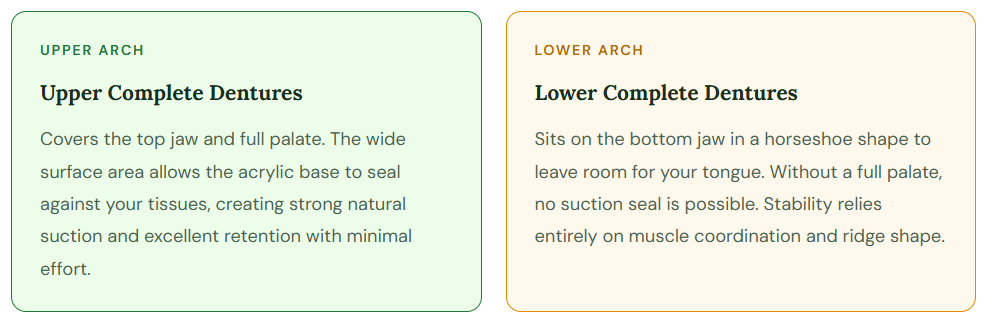
The main distinction between upper and lower complete dentures lies in their design and stability. An upper denture covers the palate to create a secure suction seal, whereas a lower denture has a horseshoe shape to accommodate the tongue, relying primarily on muscle coordination and the bony ridge for support.
Transitioning to full dental prosthetics is a major milestone. Recognizing the differences between upper and lower dentures is key to adaptation. To restore your smile and chewing function, choosing a high-quality Truesmile Complete Dentures service provides a reliable and customized solution. Understanding these upper lower denture differences helps you prepare for the unique physical sensations of each appliance.

Anatomical Differences in Design and Function
Your oral anatomy dictates how each prosthetic behaves. The upper jaw offers a large surface, whereas the lower jaw moves constantly. Consequently, a complete denture comparison shows that both arches require different retention mechanisms. As noted by the Canadian Dental Association, structural support and bone preservation are vital for prosthodontic success.
Comparing Upper and Lower Complete Dentures
A complete denture comparison highlights how design affects daily use. Key upper lower denture differences stem from oral anatomy. While the upper arch benefits from stable suction, the bottom arch requires muscle coordination. Comparing upper vs lower dentures helps you understand what to expect.
| Feature | Upper Dentures | Lower Dentures |
| Design | Covers the entire palate | Horseshoe shape for tongue space |
| Stability | High due to flat bone surface | Lower due to active tongue and jaw |
| Suction | Creates natural suction seal | Minimal to no suction capability |
| Adjustment | Faster adaptation period | Longer practice and adjustment time |
| Eating | Stable chewing surface | Requires bilateral chewing balance |
Key Retention Differences Explained
Design differences affect how you eat and speak. The top plate is secured by a vacuum seal, whereas the bottom plate floats on the ridge. Understanding these differences between upper and lower dentures helps avoid frustration during adaptation.
⚠️ Lower Denture Movement Is Normal, But This Is Not
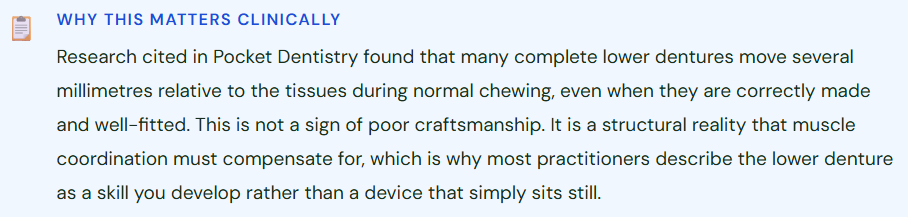
Some movement of the lower plate during chewing is expected and clinically documented. What is not normal: sharp pain in one specific spot, the plate lifting entirely out of contact with the ridge, or significant shifting just from speaking. These are signs the fit needs professional attention, not more patience. Bone ridge shape, border length, and saliva levels all affect stability and can be addressed by your denturist.
Transitioning and Adjusting to Your New Smile
Adapting to new prosthetics takes time. Patients adjusting to upper and lower dentures should expect a learning curve as their facial muscles build coordination.
Eating and Speaking with Complete Dentures
Eating with complete dentures requires practice. Start with soft foods, chewing evenly on both sides. Avoid biting with front teeth, which breaks the upper seal and shifts the lower plate. Speak slowly to adapt to the new boundaries.
Lower Denture Eating Tip
When chewing with a lower denture, always place small amounts of food on both sides simultaneously rather than loading one side at a time. Unilateral chewing creates a lever effect that tips the lower plate and causes it to lift. Keeping the load balanced keeps the plate seated and significantly reduces frustration during meals.
Why Professional Fitting Matters
Prosthetic success depends on your jaw’s contour and fitting. Over time, bone resorption causes appliances to loosen, requiring professional evaluations. To ensure stability, we suggest choosing the professional Truesmile Complete Dentures service to achieve a personalized, secure fit.
Tips for Improving Denture Comfort
- Brush appliances daily to maintain hygiene.
- Attend regular checkups to monitor gum health.
- Use a small amount of adhesive if recommended.
- Do not ignore sore spots; schedule adjustments.
- Replace or reline your prosthetics when they loosen.
Common Mistakes New Denture Wearers Should Avoid
- Expecting immediate comfort without an adjustment period.
- Chewing hard or sticky foods too early.
- Skipping scheduled adjustment appointments with your denturist.
- Neglecting daily cleaning, leading to bacterial buildup.
- Wearing ill-fitting dentures too long, causing irritation.
Upper vs Lower Denture Quick Guide
| Question | Answer |
| Which denture usually has better suction? | Upper dentures have much better suction due to full palate coverage. |
| Why do lower dentures move more? | Lower dentures move because of tongue movement and less surface area. |
| Which dentures require more adjustment? | Lower dentures require more adjustments as the bottom jaw adapts. |
| How can comfort be improved? | Comfort is improved with proper cleaning, regular checkups, and consistent wear. |
Frequently Asked Questions
What are the main upper lower denture differences?
The main upper lower denture differences involve shape and retention. The top plate covers the palate to create suction, while the bottom plate is horseshoe-shaped.
Why are lower dentures less stable?
Lower dentures feel less stable because the bottom jaw offers less surface area and faces movement from the tongue and lips, preventing a suction seal.
Do upper dentures stay in place better?
Yes, comparing upper vs lower dentures, the top plate stays secure because the palate surface area creates a natural vacuum seal.
How long does it take to adjust to complete dentures?
Adjusting to upper and lower dentures takes thirty days to several months. Over time, muscles learn to stabilize the plates.
Can you eat normally with upper and lower dentures?
Yes, but eating with complete dentures requires practice. Start with soft foods, chewing slowly on both sides.
Should upper and lower dentures feel the same?
No. The differences between upper and lower dentures mean each arch has a unique learning curve, with the bottom plate requiring muscle coordination.
Final Thoughts on Your Denture Journey
Adapting to new prosthetics is a personal journey. Understanding the upper lower denture differences helps you set realistic expectations. Whether replacing an old pair or getting your first set, professional care ensures comfort. We suggest visiting your denturist for personalized support.