

Getting dentures as a senior in Orleans involves a clear, manageable process that starts with a consultation and moves through impressions, fittings, and adjustments. At each stage, your denturist works to ensure your prosthetics fit comfortably, restore your ability to eat and speak, and support your long-term oral health. With the right care team, most seniors adapt fully within a few weeks.
For many older adults, tooth loss affects far more than appearance. It changes how you eat, how clearly you speak, and even how confident you feel in social settings. Understanding what the denture journey actually looks like helps you walk into your first appointment with realistic expectations and peace of mind.
Why Dentures Matter for Older Adults in Orleans
Tooth loss among seniors is more common than many people realize. According to the Canadian Dental Association, dentures remain one of the most widely used tooth replacement solutions for older adults across Canada, supporting both function and facial structure after significant tooth loss.
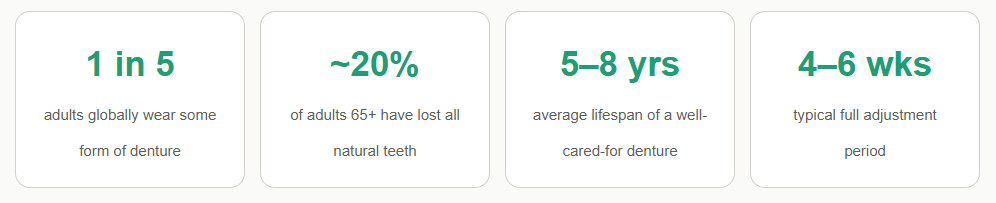
Dentures for seniors in Orleans go beyond restoring a smile. They help maintain the shape of your jaw, prevent remaining teeth from shifting, and allow you to enjoy a varied, nutritious diet. Without proper tooth replacement, bone resorption can accelerate over time, leading to a sunken facial appearance and additional oral health challenges.
What to Expect When Getting Dentures: The Full Process
| Stage | What Happens in the Chair | Estimated Timeline | My Tip for Seniors |
| Consultation | Goals, health history, and concerns reviewed. | Day 1 | Bring a list of your medications and questions! |
| Oral Exam | Gum and bone health is assessed thoroughly. | Day 1 | Don’t be shy ask about implant options. |
| Impressions | Precise molds of your mouth are taken. | Week 1-2 | Breathe slowly through your nose to suppress any gag reflex. |
| Trial Fitting | A wax model is tested for fit, look, and bite. | Week 2-3 | Speak and smile during this visit. Let’s make sure you love the look! |
| Final Adjustments | Fine-tuning the final acrylic for comfort. | Week 3-6 | Be honest about any pinching or pressure points. |
“Practice counting out loud from 65 to 70 the ‘s,’ ‘f,’ and ‘th’ sounds in those numbers are the hardest to adjust to. Do it daily in the first week and you’ll be surprised how quickly your tongue adapts.”
Simple, oddly specific, and genuinely works.
The denture process for elderly patients at Truesmile Denture Clinic in Orleans follows this structured path to ensure every prosthetic is tailored to your unique anatomy.
Adjusting to New Dentures for Seniors
The first few weeks with new dentures are a learning curve. Mild soreness, feeling like you have a “mouth full of plastic,” increased saliva, and slight speech changes are completely normal.
If you look at online support groups, like the popular r/dentures community on Reddit, you’ll see real patients sharing their journeys from “E-Day” (Extraction Day) to total comfort. I love seeing patients share advice online because it validates how normal these early struggles are.
> Why does a dentist approve of this? Singing forces your tongue, lips, and cheeks to figure out how to form words around the new acrylic without the pressure of a real conversation. Plus, the excess saliva you experience in the first week (often called the “drool phase”) will naturally subside as your brain stops registering the denture as food.
Here is what else helps during the adjustment phase:
- The Soft Food Staircase: Start with soft foods like yogurt, scrambled eggs, and mashed vegetables before working up to firmer textures.
- Read Aloud: Grab a newspaper or book and read out loud for 15 minutes a day.
- The Bite Technique: Chew on both sides of your mouth simultaneously to keep the dentures from tipping.
Take Breaks: Remove and rinse your dentures after every meal to prevent irritation.
Comfortable Denture Options for Older Adults
Not all dentures are the same. Choosing the right type makes a massive difference in your daily comfort. Comfortable denture options for older adults include:
- Full Dentures: Recommended when all natural teeth have been removed. These rest on the gum ridge and rely on natural suction (or a little adhesive) for stability.
- Partial Dentures: Used when some healthy natural teeth remain. These clip onto existing teeth to fill gaps and restore your bite balance.
- Implant-Supported Dentures: Anchored to small titanium posts in the jawbone. Denturist Note: If you hate the feeling of the roof of your mouth being covered, this is often the best solution for a secure, fixed fit!
- Flexible Dentures: Lightweight, bendable bases that conform to gum contours and are incredibly gentle on sensitive tissue.
Senior denture care Orleans begins with an honest conversation about your bone density, lifestyle, and budget to find the perfect match.
Denture Maintenance Tips for Seniors
Proper daily care protects your investment and keeps your mouth healthy.
Please, put down the regular toothpaste! Standard toothpastes (especially whitening ones) are highly abrasive and will scratch the acrylic of your dentures, creating microscopic hiding spots for bacteria and stains.
Daily Maintenance Checklist:
- Brush morning and night using a soft-bristle brush and safe cleaner.
- Soak them overnight in water or a denture solution. Acrylic needs to stay moist to keep its shape!
- Clean your gums, tongue, and palate with a soft washcloth to stimulate blood circulation.
The Sink Trick: Always handle your dentures over a folded towel or a basin filled with a few inches of water. If they slip out of your hands, the water or towel will save them from shattering on the porcelain sink.
Cost and Affordability of Seniors Dentures Orleans
Affordable dentures for seniors in Orleans are more accessible than many assume. Costs vary depending on the type of denture, the complexity of the case, and whether extractions are required.
- Full conventional dentures: Typically mid-range in cost.
- Partial dentures: Generally less expensive than full sets, depending on the framework material.
- Implant-supported dentures: Higher upfront cost, but they offer unmatched long-term durability and bone-preservation benefits.
Many private insurance plans cover a portion of denture costs, and the Canadian Dental Care Plan (CDCP) also provides excellent coverage options for eligible seniors. Always ask us for a detailed, transparent treatment estimate before beginning. No surprises, just smiles.
The First-Month Food Guide for New Denture Wearers
Diet adjustment is one of the most practical challenges in the early weeks. Here’s a simple guide to what works and what to avoid while your gums and jaw muscles are still adapting.
Frequently Asked Questions About Seniors Dentures Orleans
How long does it take to get dentures in Orleans?
The full process typically takes three to six weeks from your first consultation to the final fitting, depending on how complex your custom case is.
Are dentures comfortable for seniors?
Yes, absolutely when properly fitted! Custom-made dentures are designed to avoid pressure points and slipping, making daily wear incredibly comfortable compared to cheap, generic alternatives.
How often should dentures be replaced?
Your mouth changes as you age, but your dentures do not. Most dentures last 5 to 8 years. However, coming in for an annual checkup allows us to check for wear and recommend a “reline” (adding new material to the base) to keep them fitting snugly as your gums change.
What foods should be avoided with new dentures?
In the first few weeks, avoid hard nuts, raw carrots, sticky caramels, and very chewy bread or steak. Gradually reintroduce firmer foods as your confidence grows.
Final Thoughts from Your Denturist
Your comfort, confidence, and quality of life deserve to be prioritized. It is completely normal to feel a bit apprehensive, but you don’t have to navigate this transition alone. With clear expectations, the right prosthetic choice, and a few insider tricks, seniors in Orleans can enjoy a natural-looking, secure smile that brings back the joy of eating and speaking.
If you’re ready to take the first step or even if you just have a few questions, reach out to our friendly team at Truesmile Denture Clinic in Orleans. Let’s schedule a consultation and get you back to smiling with confidence.