

Maintaining a fresh smile requires a dedicated hygiene routine to keep your artificial teeth free of bacteria and buildup. The best way to learn how to clean dentures properly involves rinsing them after every meal, brushing all surfaces daily with a soft-bristled brush, and soaking them in a dentist-approved cleaning solution overnight.

Why You Must Learn How to Clean Dentures Properly
According to the Canadian Dental Association, approximately 6.4% of Canadian adults have no natural teeth, making quality prosthetics essential for speech and chewing. Neglecting your daily denture cleaning routine allows plaque and bacteria to accumulate on the acrylic base. This buildup can lead to gum irritation, painful infections, and bad breath. Implementing proper denture care and maintenance protects your gums, prevents permanent staining, and ensures your appliance remains comfortable and functional.
Persistent bad breath, a burning sensation under your dentures, or white patches on your gums can be signs of a fungal infection such as oral thrush, often linked to poor denture hygiene. If you notice any of these, see a denturist or dentist promptly rather than relying on home remedies.
Your Step-by-Step Daily Denture Cleaning Routine
Understanding how often dentures should be cleaned is the foundation of excellent oral health. Dentures require thorough cleaning at least once a day, along with rinsing after every meal to keep the oral cavity fresh and free of debris.
Step 1: Rinse After Every Meal
Remove your prosthetics carefully after eating and run them under lukewarm water to wash away loose food debris. This simple habit prevents food particles from getting trapped underneath the base, minimizing gum irritation and bacterial growth.
Step 2: Brush with a Soft-Bristled Brush
Brushing daily is the best way to clean dentures and keep them shining. Use a brush specifically designed for prosthetics, applying gentle pressure to clean all surfaces without scratching the delicate acrylic material.
Selecting Safe Cleaning Agents
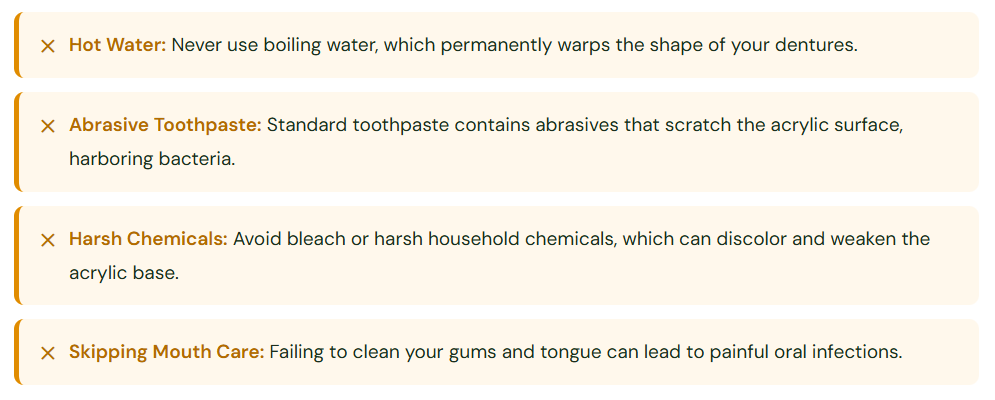
Never use standard toothpaste on your prosthetics, as its abrasive particles can create microscopic scratches that harbor bacteria. Instead, choose mild dish soap or products safe for cleaning dentures to learn how to clean dentures properly without causing scratches.
Hold your dentures over a folded towel or a basin filled with water while cleaning them. If they slip from your hands, this small cushion can prevent them from cracking on a hard sink surface, a surprisingly common cause of accidental damage.
Soaking and Deep Cleaning Guidelines
Overnight Denture Soaking and Storage Tips
Leaving your dentures dry overnight can cause them to warp and lose their custom shape. Implementing correct denture soaking and storage tips, such as keeping them in cool water or a mild soaking solution, keeps the acrylic pliable and helps you learn how to clean dentures properly overnight.
Cleaning Denture Stains and Buildup
Over time, coffee, tea, and natural minerals in your saliva can create stubborn discoloration. Rather than scraping the surface, use specialized effervescent tablets once or twice a week for cleaning denture stains and buildup.

Common Denture Cleaning Mistakes to Avoid
Many people unintentionally damage their prosthetics by using improper methods. Avoid these common denture cleaning mistakes to prolong the lifespan of your appliance:
Mouthwash containing alcohol is not recommended for soaking dentures. Alcohol based rinses can dry out and weaken the acrylic over time, causing it to become brittle. Stick to plain water or a denture cleaning solution made specifically for prosthetics.
Best Way to Clean Dentures: Method Comparison
Choosing the best way to clean dentures makes a significant difference in both safety and cleanliness. The table below compares the most common options:
| Cleaning Method | Safety | Effectiveness | Recommended |
| Toothpaste | Low (Abrasive) | Moderate (Cleans well) | No (Scratches acrylic) |
| Soap and Water | High (Gentle) | Low (Doesn’t kill bacteria) | Yes (For daily wash) |
| Denture Cleaner Tablets | High (Non-abrasive) | High (Kills 99% bacteria) | Yes (Daily soak) |

Professional Denture Clinic Support
According to the Government of Canada, maintaining proper oral health is vital for preventing systemic infections and nutritional issues. If you experience persistent staining, loose fit, or minor discomfort, seeking help from a reputable Denture Clinic in Cornwall is highly recommended. The experienced team at Truesmile Denture Clinic in Cornwall can provide professional cleanings, soft relines, and essential structural adjustments to keep your smile healthy and radiant.
Frequently Asked Questions
How often should dentures be cleaned?
You should clean your dentures thoroughly at least once a day, preferably before bedtime, and rinse them after meals.
Can I use toothpaste on dentures?
No, standard toothpaste is too abrasive and scratches acrylic, creating tiny crevices where bacteria collect.
What is the best way to clean dentures properly?
To master how to clean dentures properly, rinse them after eating, brush daily with a soft brush and non-abrasive soap, and soak them overnight.
Can dentures be soaked overnight?
Yes, keeping them soaked in cool water or a mild denture cleaning solution overnight is essential to prevent warping.
What happens if I don’t clean my dentures daily?
Neglecting daily cleaning leads to severe plaque buildup, foul mouth odors, gum irritation, and potential fungal infections.
How do I remove stains from dentures?
Use non-abrasive denture-cleansing tablets weekly, and consult a professional clinic for safe, professional stain removal.
Final Thoughts
Learning how to clean dentures properly is a simple yet vital habit to maintain your oral health and smile confidence. By pairing proper home care with professional checkups, you can ensure your prosthetics remain comfortable, hygienic, and functional for years to come.